
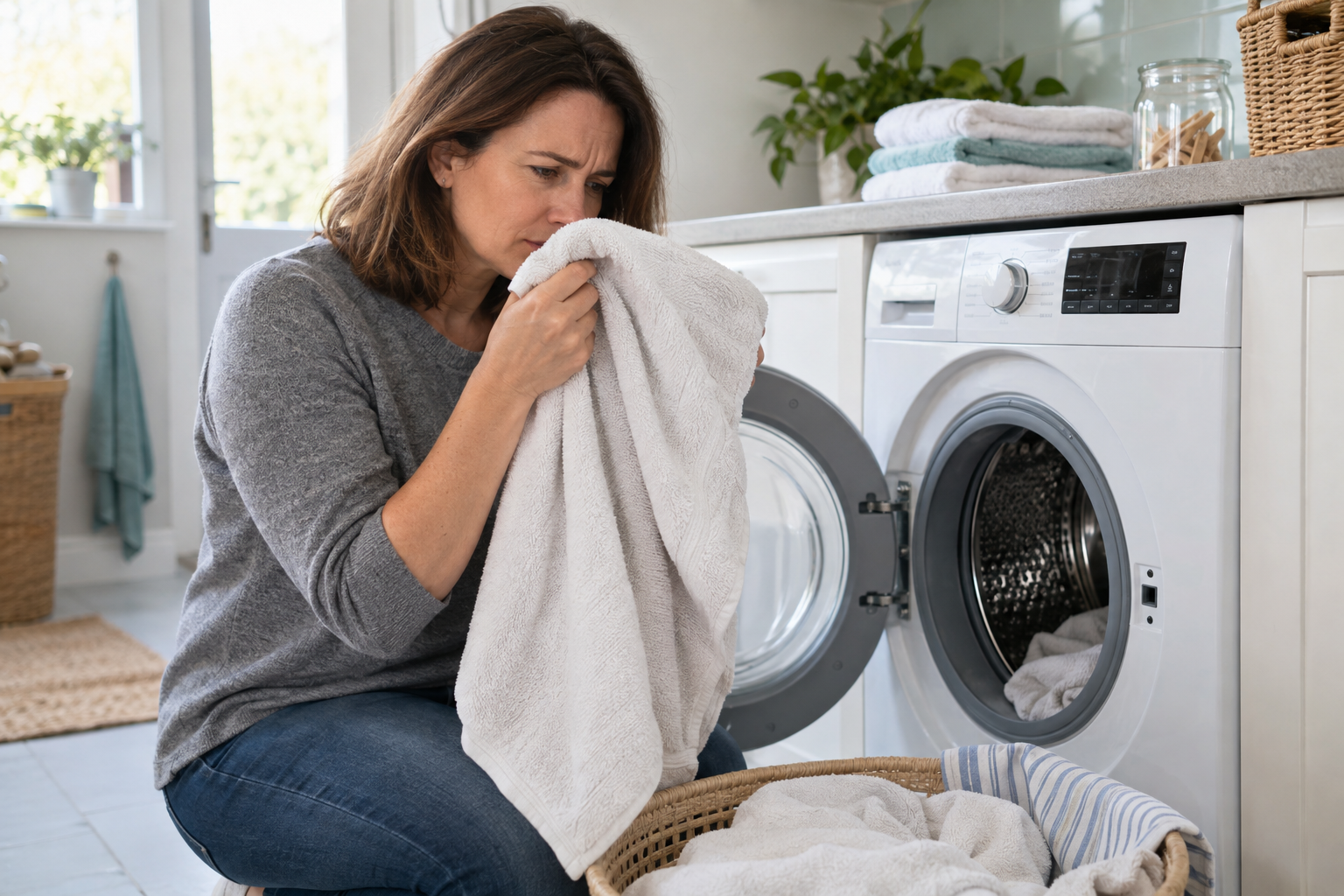
The cycle is finished. The towel looks clean. Then you lift it to your face.
That same damp smell.
You try a different detergent. Maybe a stronger fabric conditioner. The scent changes, but the question remains: what is happening inside the machine?
A washer can contribute to laundry odour. Research has explored how odour-producing material in washing machines can affect fabrics. It is a reason to look beyond the bottle you put in the drawer.
The laundry leaves. Some of its residue can stay.
Think about what goes into a wash with your clothes, towels and bedding.
Tiny skin particles, body soils, loose hair and lint. Some of this organic material contains proteins. It can mix with detergent deposits and moisture in the machine.
The visible drum is only part of the picture. Folds in the rubber seal and the detergent drawer deserve attention too.
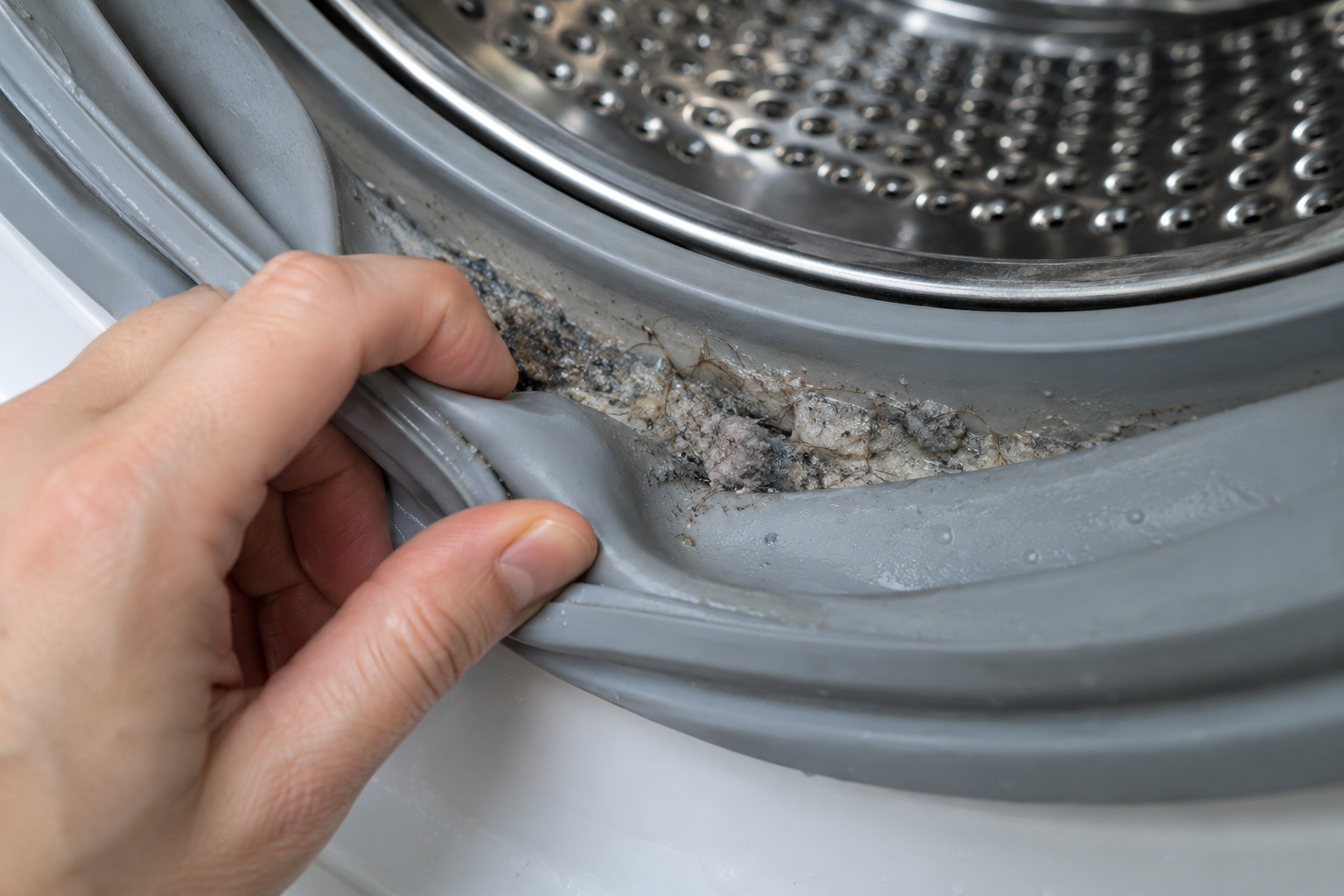
In a damp machine, accumulated soils and microbial activity can contribute to stale smells. Protein-containing residue can be part of that mixture; it is not the only possible cause.
A stronger scent cannot tell you what is left behind.
Changing the fragrance does not replace cleaning the machine.
Detergent, fabric conditioner and machine-care products have different roles. Some laundry detergents already contain enzymes. That still does not make a clothes wash the same job as the appliance’s maintenance routine.
- Fragrance changes the scent.
- A pleasant smell does not show whether deposits remain inside the washer.
- Anti-limescale care addresses mineral build-up.
- Mineral deposits and protein-containing organic soils are different types of material. Check what a product is formulated to do.
- Protein-targeting enzymes have a specific job.
- They help break larger protein molecules into smaller fragments. The enzyme and the full formula matter.
Before buying another scent, consider the cleaning step the machine itself needs.
Break down the residue. Make it easier to remove.
Proteins are built from linked chains. Certain cleaning enzymes, known as proteases, cut those chains into smaller pieces.
That action can help a cleaning formula remove protein-based soils. It is a cleaning mechanism, not a fragrance effect.
Which residues a product can tackle depends on its enzymes, formulation and conditions of use.
The illustration explains a general enzyme mechanism. It does not represent a Tambou laboratory result or demonstrate that whole hair fibres dissolve.

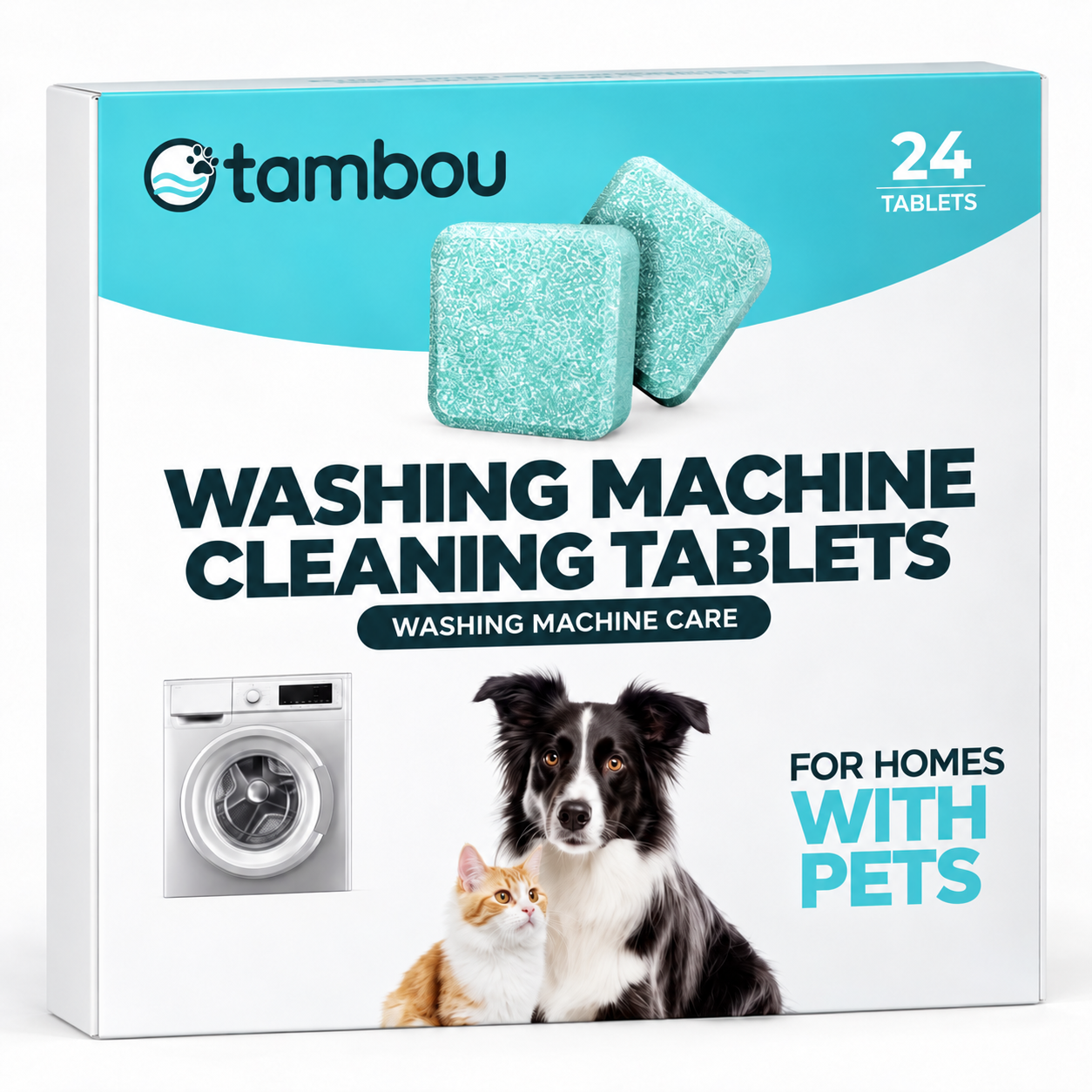
Tambou washing machine cleaning tablets
Give the machine a clean of its own.
Tambou’s enzyme-based formula is designed to help break down protein-based organic residues during a dedicated machine-cleaning cycle.
A cleaning step for the appliance behind every towel, shirt and set of sheets.
- Enzyme-based machine-care formula
- Convenient tablet format
- Used in a dedicated cycle, alongside cleaning accessible parts
Choose from 24, 48 or 72 tablets.
A place in your home-care routine.
AI-generated scenes with fictional people. Illustrative images, not customer photos or proof of purchase.
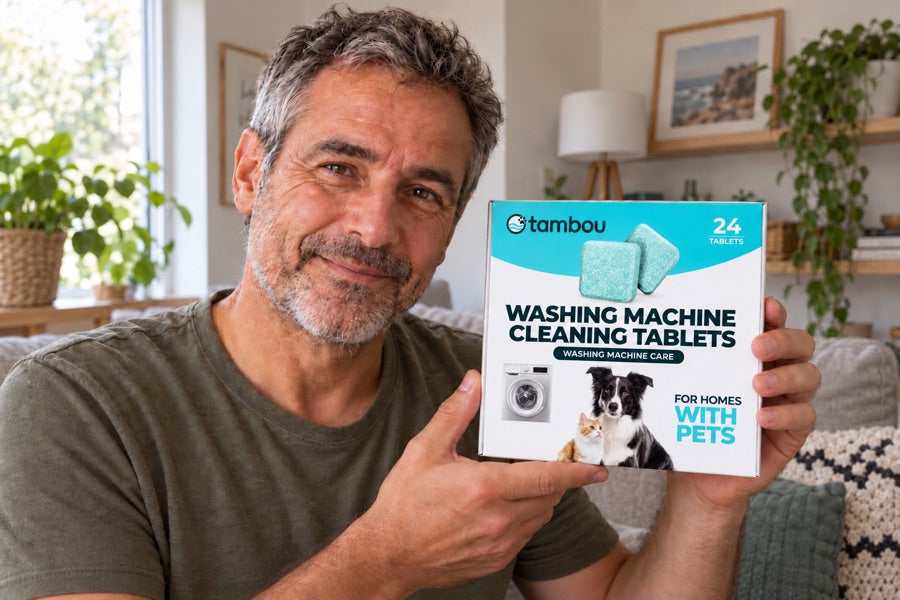
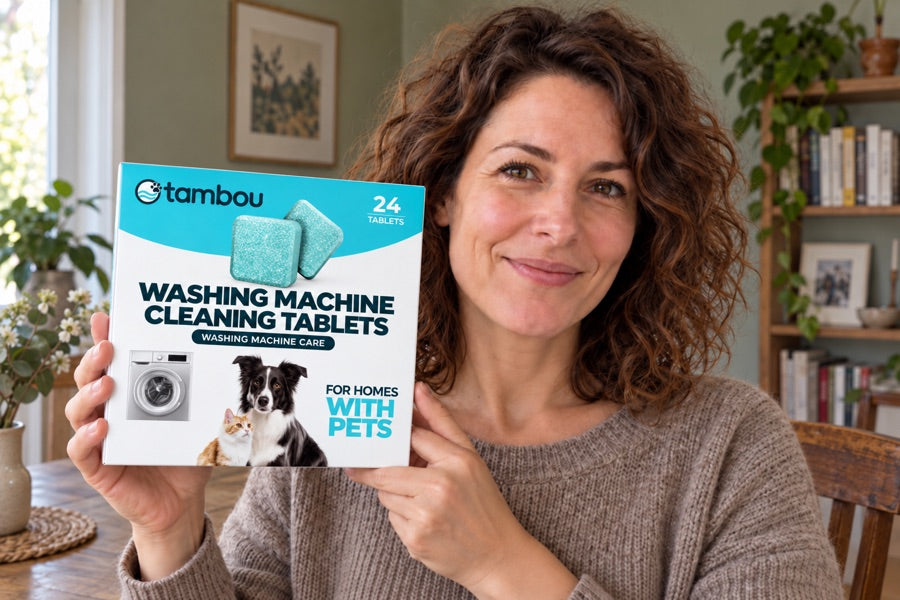
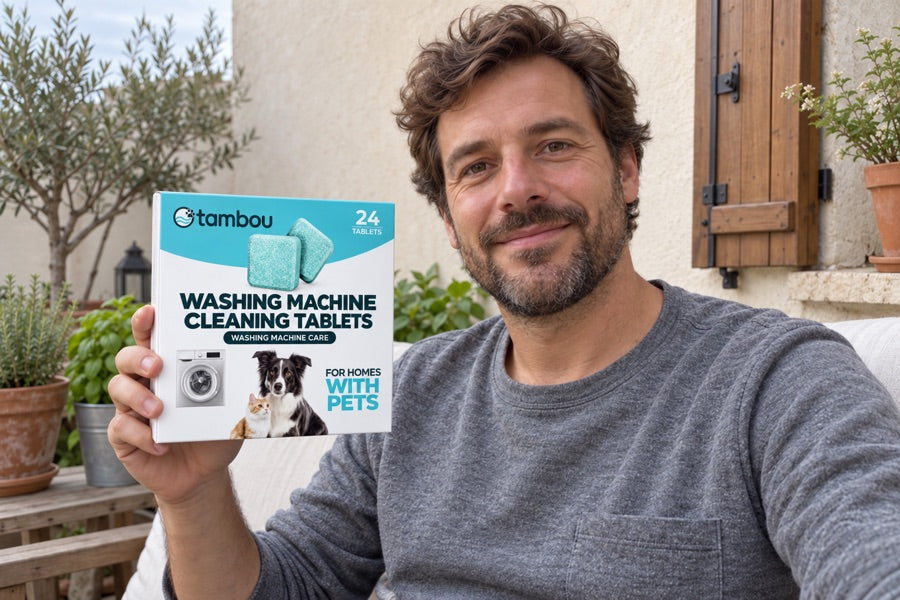
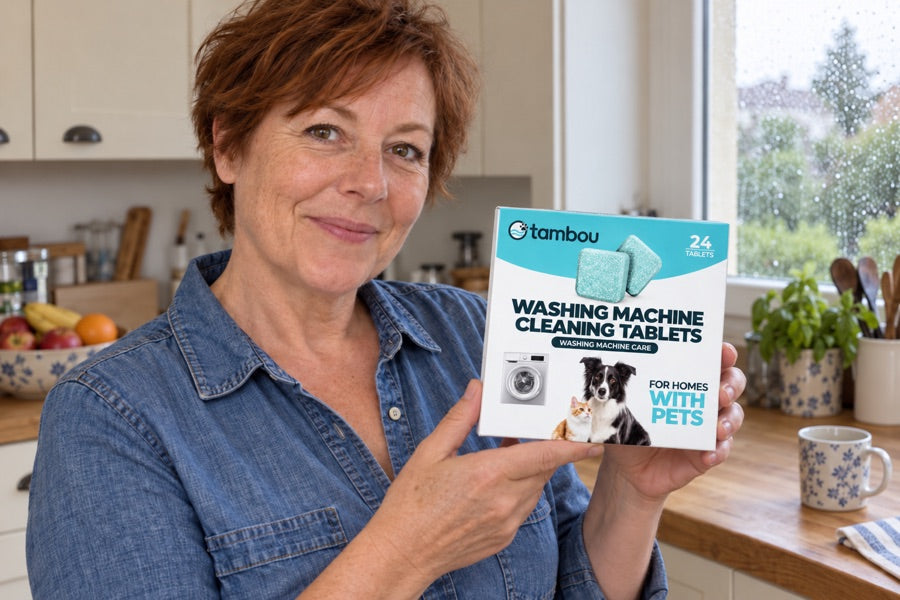
Swipe to explore the photos.
Turn the explanation into a simple routine.
Start with an empty machine.
Remove the laundry. Clear visible hair and lint, and clean the drawer and accessible seal as your appliance guide directs.
Use Tambou as directed.
Follow the pack for dosage and placement. Choose the cleaning programme specified by the product and machine instructions.
Keep up the care between loads.
Remove wet laundry promptly and follow your machine’s guidance on drying and ventilation.
Persistent odour can have other causes, including drainage problems. If appropriate cleaning does not resolve it, consult the appliance manufacturer.
Before you change detergent again, give the machine some attention.
The next basket goes through the same washer. Make its care part of the routine.
Do I still need to clean the seal and drawer?
Yes. Remove visible debris and clean accessible parts according to your appliance manual. A dedicated machine-cleaning cycle complements that routine.
Can I use it with clothes in the machine?
Tambou is a machine-care product. Follow the pack instructions and use it with the drum empty of laundry.
How often should I use it?
Follow your appliance’s maintenance schedule and the directions on the product pack. The amount of laundry and your machine’s requirements can vary.